
TCS Industries Limited supplies Hyaluronic Acid CAS 9004-61-9 for pharmaceutical B2B procurement — COA, MSDS, and technical documentation available on request.
> Overview
| Product Name | Hyaluronic Acid |
|---|---|
| Structural Formula | 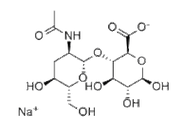 |
| CAS Number | 9004-61-9 |
| Molecular Formula | (C 14 H 21 NO 11 ) n |
| Molecular Weight | Grade-dependent (typ. 1,000,000–4,000,000 g/mol) |
| InChIKey | Not applicable (polydisperse polymer) |
| SMILES | Available on request where applicable |
| Appearance | White to off-white powder |
| Purity / Grade | By agreed specification and batch COA |
| Storage | Room temperature, dry conditions, protect from moisture |
Hyaluronic Acid (CAS 9004-61-9, also known as hyaluronan or sodium hyaluronate) is a naturally occurring glycosaminoglycan with the repeating disaccharide unit of D-glucuronic acid and N-acetyl-D-glucosamine. It has high molecular weight (typically 500 kDa to 4 MDa depending on source and grade). Hyaluronic acid is used in ophthalmic surgery, viscosupplementation, dermal fillers, wound healing, and cosmetic applications.
TCS Industries Limited, a Hong Kong-based company, supplies Hyaluronic Acid (sodium hyaluronate) in pharmaceutical, medical device, and cosmetic grades for global procurement programs.
> Applications
Ophthalmic viscoelastic and viscosupplementation
High-molecular-weight sodium hyaluronate is used as an ophthalmic viscoelastic device (OVD) during cataract and intraocular surgery to maintain anterior chamber depth and protect corneal endothelium. Intra-articular injection (viscosupplementation) of cross-linked or high-MW hyaluronate improves joint lubrication and reduces pain in osteoarthritis. Balazs et al. (J Rheumatol, 2004, 31 Suppl 70:46–48) described the viscoelastic properties of hyaluronan and the scientific basis for viscosupplementation in osteoarthritis treatment.
Dermal fillers and wound healing
Cross-linked hyaluronic acid (HA) gels are used as injectable dermal fillers for facial volume restoration and wrinkle correction (Juvederm, Restylane). Non-cross-linked HA is used in wound dressings and topical formulations to promote moist wound healing. Cosmetic-grade HA is used in skin care products for hydration.
> Sourcing & Supply
TCS Industries Limited supports development, qualification and commercial purchasing discussions for Hyaluronic Acid with buyers in Australia, New Zealand, Canada and South Korea.
- Evaluation and commercial quantities: 10 g samples for formulation testing; 100 g and 1 kg for production. Pharmaceutical, medical device, and cosmetic grades in multiple molecular weight ranges available. Fermentation-derived (non-animal origin).
- Pallet quantities and production campaigns: repeat supply is coordinated against packaging, lead time, annual demand and destination-market import requirements.
> Quality & Documentation
Key specification parameters include molecular weight (grade-specific: 500 kDa–4 MDa), intrinsic viscosity, glucuronic acid content, protein content (≤0.1% for pharma grade), endotoxin (for injectable grade), nucleic acids, heavy metals, and microbial limits. White to off-white powder (sodium hyaluronate form). Freely soluble in water, forming viscous solutions. Source: bacterial fermentation (Streptococcus zooepidemicus) or rooster comb extraction. Identity by HPLC and IR. Meets Ph.Eur. (Natrii hyaluronas), JP, and in-house specifications. COA and MSDS are standard.
> Packaging
Sodium hyaluronate is a white to off-white hygroscopic powder. Standard packaging includes sealed foil bags under nitrogen or vacuum in fibre drums (10 g, 100 g, 500 g, or 1 kg). Store at controlled room temperature (15–25 °C). Protect from moisture. Shelf life is typically 36 months. Labels and documents are checked before dispatch.
> Pricing & MOQ
Pricing is quoted by specification, packaging and destination. Common commercial discussions use 25 kg bag/drum formats, pallet quantities and production-campaign planning; smaller samples may be reviewed for qualified formulation teams.
> Regulatory & Compounding Context
Sodium hyaluronate is monographed in Ph.Eur. (Natrii hyaluronas) and JP. Ophthalmic and intra-articular products are regulated as medical devices or combination products (jurisdiction-dependent). Dermal fillers are regulated as medical devices (EU Class III, US FDA). Cosmetic-grade HA has no specific regulatory restriction. Source and grade specifications must match the intended application.
> Alias Index
- Chemical name: Hyaluronan, Sodium hyaluronate
- CAS Number: 9004-61-9
- Abbreviation: HA
- Ph.Eur. name: Natrii hyaluronas
- Source: Bacterial fermentation (Streptococcus) or rooster comb
- Applications: OVD, viscosupplementation, dermal filler, cosmetic hydrator
- Commercial request terms: hyaluronic acid API, sodium hyaluronate pharma grade, HA powder, dermal filler raw material, TCS Industries Limited
> FAQ
What molecular weight grades are available?
Low MW (10–100 kDa): better skin penetration, used in cosmetics. Medium MW (500 kDa–1 MDa): general pharmaceutical and cosmetic use. High MW (1–2 MDa): ophthalmic OVDs and viscosupplementation. Ultra-high MW (>2 MDa): highest viscosity, used in premium ophthalmic products. Specify MW range based on intended application.
What documents are available for Hyaluronic Acid orders?
COA and MSDS are standard for commercial discussions. COO, packing list, invoice and other import-support documents can be arranged according to order scope.
Do you supply Hyaluronic Acid to Australia and Canada?
Yes. We support B2B buyers in Australia, New Zealand, Canada and South Korea, subject to route and document review.
Do you supply New Zealand and South Korea?
Yes. We review Australia, New Zealand, Canada and South Korea for project supply, import documents, packaging and logistics planning before quotation.
Is fermentation-derived HA animal-free?
Yes. Fermentation-derived sodium hyaluronate (from Streptococcus zooepidemicus) is non-animal origin, avoiding BSE/TSE risk associated with rooster comb extraction. Fermentation-derived material is preferred for pharmaceutical and cosmetic applications due to consistent quality, higher purity, and absence of animal-origin contamination concerns.
What is cross-linked HA?
Cross-linked HA uses chemical cross-linkers (BDDE is standard) to create covalent bonds between HA chains, forming a gel that resists enzymatic degradation. This extends residence time from hours (native HA) to 6–18 months (cross-linked filler). Cross-linking degree, particle size, and HA concentration determine the filler lifting capacity and duration.
Can you arrange samples before commercial purchasing?
Samples or evaluation quantities may be reviewed for qualified buyers after target specification, application and destination-market requirements are clarified.
How is Hyaluronic Acid packaged for export?
Packaging is confirmed by quantity and material properties. Typical options include foil bags, HDPE containers, fibre drums, 25 kg bags or palletized export packaging.
Can buyer-defined specifications be reviewed?
Yes. Send the specification, methods, impurity limits and required documents. TCS can review feasibility before confirming quotation and lead time.
What payment terms are normally used?
Standard payment is 100% T/T before dispatch unless a different arrangement has been approved for an established commercial account.
What lead time should buyers expect?
Lead time depends on stock, batch size, document scope and destination. Available stock can move faster; made-to-order or pallet programs require longer planning.
Is HA regulated as a drug or medical device?
Classification depends on jurisdiction and intended use. Ophthalmic viscoelastics: medical device (EU/US). Intra-articular injections: medical device (EU) or drug (varies by jurisdiction). Dermal fillers: medical device (EU Class III, US FDA). Cosmetic skin care: cosmetic. Wound healing: medical device. Regulatory strategy must match the specific product category.
Last reviewed: June 2026
Evaluation and research orders (≤10 kg) are shipped with COA, MSDS, and certificate of origin. Bulk commercial orders (>10 kg) qualify for volume pricing with a full technical documentation package available on request.
> Request a Quote
If your team already has a target application, estimated quantity, destination market, or documentation requirements, send those details so the commercial response can be prepared more efficiently.