
TCS Industries Limited (China-sourced API supplier) supplies N-Carbamyl-L-Glutamic Acid (NCG) — Plant Extract CAS 1188-38-1 for pharmaceutical B2B procurement — COA, MSDS, and technical documentation available on request.
> Overview
| Product Name | N-Carbamyl-L-Glutamic Acid (NCG) |
|---|---|
| Structural Formula | 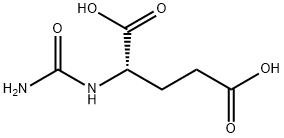 |
| CAS Number | 1188-38-1 |
| Molecular Formula | C6H10N2O5 |
| Molecular Weight | 190.15 g/mol |
| InChIKey | LCQLHJZYVOQKHU-VKHMYHEASA-N |
| SMILES | Available on request where applicable |
| Appearance | White to off-white crystalline powder |
| Purity / Grade | By agreed specification and batch COA |
| Storage | Keep tightly closed in a cool, dry, well-ventilated place |
N-Carbamyl-L-Glutamic Acid (NCG, CAS 1188-38-1) is a synthetic structural analogue of N-acetylglutamate (NAG) with the formula C₆H₁₀N₂O₅ (MW 190.15). NCG activates carbamoyl phosphate synthetase I (CPS I) in the urea cycle, serving as a pharmacological replacement for NAG in patients with N-acetylglutamate synthase (NAGS) deficiency. It is the active ingredient in Carbaglu (carglumic acid), the only approved treatment for NAGS deficiency and hyperammonemia.
TCS Industries Limited, a Hong Kong-based trading and sourcing company, supplies N-Carbamyl-L-Glutamic Acid (NCG) as an API intermediate and research material for pharmaceutical procurement programs.
> Applications
API for urea cycle disorder treatment
Carglumic acid (NCG) is the API in Carbaglu, indicated for NAGS deficiency (primary hyperammonemia) and as adjunctive therapy in organic acidemias (propionic acidemia, methylmalonic acidemia) with acute hyperammonemia. NCG bypasses the defective NAGS enzyme by directly activating CPS I, restoring urea cycle function. Ah Mew et al. (Mol Genet Metab, 2018, 125:44–56) reviewed the clinical outcomes of carglumic acid therapy in urea cycle disorders.
Animal nutrition urea cycle enhancer
NCG is used as a feed additive in livestock nutrition (particularly in swine and poultry) to enhance nitrogen utilization and improve growth performance by optimizing urea cycle efficiency. In this application, NCG is used at 50–100 mg/kg feed to reduce plasma ammonia levels and improve protein deposition efficiency.
> Sourcing & Supply
TCS Industries Limited supports development, qualification and commercial purchasing discussions for N-Carbamyl-L-Glutamic Acid (NCG) with buyers in Germany, France, Italy, Spain, the United Kingdom, the United States, Canada and Australia.
- Evaluation samples: botanical identity, assay basis and document needs are reviewed before dispatch.
- Commercial lots: repeat supply is arranged by specification, extract ratio, marker compound and destination-market requirements.
> Quality & Documentation
Key specification parameters include assay (≥98.0% by HPLC), related substances, specific rotation, loss on drying, residue on ignition, heavy metals (Pb ≤10 ppm for API), sulfated ash, pH, and microbial limits. White to off-white crystalline powder. Identity confirmed by HPLC, IR, and melting point (169–172 °C). API-grade material must meet appropriate pharmacopoeial or internal specifications. COA and MSDS are standard.
> Packaging
NCG is a white to off-white crystalline powder, non-hygroscopic under normal conditions. Standard packaging includes 1 kg aluminum foil bags or 25 kg fibre drums with PE liner. Store at controlled room temperature (15–25 °C) in dry, light-protected conditions. Shelf life is typically 24 months. Labels and documents are checked before dispatch.
> Pricing & MOQ
Pricing is quoted by marker specification, extract ratio, packaging and destination. Samples, 25 kg packs and pallet quantities can be discussed according to project stage.
> Regulatory & Compounding Context
Carglumic acid (NCG) is approved as an orphan drug in the EU (Carbaglu, Recordati) and US (Carbaglu, FDA). API material for pharmaceutical manufacturing requires CEP or DMF filing. For animal nutrition use, regulatory status varies by jurisdiction — registered as a feed additive in some markets. No specific pharmacopoeial monograph in USP or Ph.Eur. for the substance itself; internal quality specifications apply.
> Alias Index
- IUPAC: (2S)-2-(Carbamoylamino)pentanedioic acid
- CAS Number: 1188-38-1
- Formula: C₆H₁₀N₂O₅ (MW 190.15)
- INN: Carglumic acid
- Brand name: Carbaglu (Recordati)
- Abbreviation: NCG
- InChIKey: LCQLHJZYVOQKHU-VKHMYHEASA-N
- Commercial request terms: N-carbamyl-L-glutamic acid, carglumic acid API, NCG feed additive, urea cycle disorder API, TCS Industries Limited
> FAQ
What is the mechanism of action of NCG?
NCG (carglumic acid) is a structural analogue of N-acetylglutamate (NAG), the natural activator of carbamoyl phosphate synthetase I (CPS I) — the first enzyme of the urea cycle. In NAGS deficiency, NAG is not produced. NCG bypasses this defect by directly binding to and activating CPS I, restoring urea synthesis and lowering blood ammonia.
What documents are available for N-Carbamyl-L-Glutamic Acid (NCG) orders?
COA and MSDS are standard for commercial discussions. COO, packing list, invoice and other import-support documents can be arranged according to order scope.
Do you supply N-Carbamyl-L-Glutamic Acid (NCG) to Germany, France and Spain?
Yes. We support B2B buyers in Germany, France, Italy, Spain, the United Kingdom, the Netherlands, Poland and Switzerland, subject to route and document review.
Do you supply the United States, Canada and Australia?
Yes. We review the United States, Canada, Australia and New Zealand for project supply, import documents, packaging and logistics planning before quotation.
What is the difference between API and feed-grade NCG?
API-grade NCG meets pharmaceutical purity requirements (≥98.0%, controlled related substances, heavy metals limits per ICH Q3D) and requires DMF or CEP filing. Feed-grade NCG meets animal nutrition purity standards (typically ≥97.0%) with less stringent impurity controls. Specify the intended application at inquiry.
Is NCG an orphan drug?
Yes. Carglumic acid (Carbaglu) has orphan drug designation in both the EU and US for the treatment of NAGS deficiency, a rare inborn error of metabolism affecting fewer than 1 in 1,000,000 births. Orphan designation provides market exclusivity and regulatory incentives.
Can you arrange samples before commercial purchasing?
Samples or evaluation quantities may be reviewed for qualified buyers after target specification, application and destination-market requirements are clarified.
How is N-Carbamyl-L-Glutamic Acid (NCG) packaged for export?
Packaging is confirmed by quantity and material properties. Typical options include foil bags, HDPE containers, fibre drums, 25 kg bags or palletized export packaging.
Can buyer-defined specifications be reviewed?
Yes. Send the specification, methods, impurity limits and required documents. TCS can review feasibility before confirming quotation and lead time.
What payment terms are normally used?
Standard payment is 100% T/T before dispatch unless a different arrangement has been approved for an established commercial account.
What lead time should buyers expect?
Lead time depends on stock, batch size, document scope and destination. Available stock can move faster; made-to-order or pallet programs require longer planning.
What animal nutrition applications use NCG?
NCG is used in swine and poultry feed at 50–100 mg/kg to enhance urea cycle function, improve nitrogen utilization efficiency, reduce plasma ammonia, and increase protein deposition. Published studies show improved growth performance and feed conversion ratios. Regulatory status as a feed additive varies by jurisdiction.
Last reviewed: June 2026
Evaluation and research orders (≤10 kg) are shipped with COA, MSDS, and certificate of origin. Bulk commercial orders (>10 kg) qualify for volume pricing with a full technical documentation package available on request.
> Request a Quote
If your team already has a target application, estimated quantity, destination market, or documentation requirements, send those details so the commercial response can be prepared more efficiently.