
TCS Industries Limited (China-sourced API supplier) supplies Glycerol — Pharmaceutical Excipient CAS 56-81-5 for pharmaceutical B2B procurement — COA, MSDS, and technical documentation available on request.
> Overview
| Product Name | Glycerol |
|---|---|
| Structural Formula | 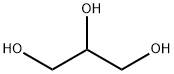 |
| CAS Number | 56-81-5 |
| Molecular Formula | C₃H₈O₃ |
| Molecular Weight | 92.09 g/mol |
| InChIKey | PEDCQBHIVMGVHV-UHFFFAOYSA-N |
| SMILES | Available on request where applicable |
| Appearance | Clear, colourless, viscous, hygroscopic liquid |
| Purity / Grade | By agreed specification and batch COA |
| Storage | Keep tightly closed in a cool, dry, well-ventilated place |
Glycerol (CAS 56-81-5, also known as glycerin) is a trihydric alcohol with the formula C₃H₈O₃ (MW 92.09). It is a colourless, viscous, sweet-tasting liquid produced by hydrolysis or transesterification of fats and oils (natural glycerol) or by synthetic routes from propylene. Glycerol is used as a humectant, solvent, plasticizer, sweetener, and tonicity agent in pharmaceutical, cosmetic, food, and industrial applications.
TCS Industries Limited, a Hong Kong-based trading and sourcing company, supplies Glycerol in pharmaceutical (USP/Ph.Eur.), food, and technical grades for global procurement programs.
> Applications
Pharmaceutical excipient and vehicle
Glycerol is used as a humectant in topical formulations (creams, lotions, ointments), a solvent and co-solvent in oral and parenteral solutions, a plasticizer in gelatin capsule shells and film coatings, and a tonicity adjuster in ophthalmic and injectable preparations. Glycerol suppositories (USP) are used as osmotic laxatives. Fluhr et al. (Br J Dermatol, 2008, 159:23–34) reviewed the dermatological applications of glycerol as a moisturizer and skin barrier repair agent.
Food ingredient and cosmetic humectant
Glycerol (E422) is used in food products as a humectant, sweetener (0.6× sucrose sweetness), solvent for flavors, and water activity reducer in intermediate-moisture foods. In cosmetics, it is among the most used moisturizing ingredients, attracting water from the dermis and atmosphere to the stratum corneum.
> Sourcing & Supply
TCS Industries Limited supports development, qualification and commercial purchasing discussions for Glycerol with buyers in Germany, France, Italy, Spain, the United Kingdom, the United States, Canada and Australia.
- Evaluation and commercial quantities: 25 kg jerrycans for qualification; 250 kg drums and IBC for production. Vegetable-origin (palm, soy, rapeseed) and synthetic options in pharmaceutical, food, and technical grades available.
- Pallet quantities and production campaigns: repeat supply is coordinated against packaging, lead time, annual demand and destination-market import requirements.
> Quality & Documentation
Key specification parameters include assay (≥99.0% for USP/Ph.Eur.), water content (≤1.0%), colour (≤10 APHA), residue on ignition, chloride, sulfate, heavy metals (Pb ≤0.5 ppm), fatty acids and esters, diethylene glycol and ethylene glycol (≤0.1%), halogenated compounds, acrolein, glucose, ammonium, and microbial limits. Clear, colourless, syrupy liquid. Specific gravity 1.261 at 25 °C. COA and MSDS are standard.
> Packaging
Glycerol is a clear, viscous liquid, hygroscopic. Standard packaging includes 25 kg HDPE jerrycans, 250 kg steel or HDPE drums, or 1000 kg IBC. Store at room temperature. Protect from moisture absorption. Shelf life is typically 24 months in sealed containers. Labels and documents are checked before dispatch.
> Pricing & MOQ
Pricing is quoted by specification, packaging and destination. Common commercial discussions use 25 kg bag/drum formats, pallet quantities and production-campaign planning; smaller samples may be reviewed for qualified formulation teams.
> Regulatory & Compounding Context
Glycerol is monographed in USP-NF, Ph.Eur. (Glycerolum), BP, JP, and FCC. Approved as a food additive in the EU (E422, quantum satis). GRAS in the US (21 CFR 182.1320). Listed in the FDA IID for oral, topical, ophthalmic, parenteral, rectal, and other dosage forms. On the WHO Model List of Essential Medicines (laxative). No special import permits.
> Alias Index
- IUPAC: Propane-1,2,3-triol
- CAS Number: 56-81-5
- Formula: C₃H₈O₃ (MW 92.09)
- Common names: Glycerin, Glycerine, Glycerol
- EU food additive: E422
- Pharmacopoeial name: Glycerolum (Ph.Eur.)
- InChIKey: PEDCQBHIVMGVHV-UHFFFAOYSA-N
- Commercial request terms: glycerol USP, glycerin pharma grade, E422, vegetable glycerin, pharmaceutical humectant, TCS Industries Limited
> FAQ
What is the difference between vegetable and synthetic Glycerol?
Vegetable glycerol is a co-product of fat/oil transesterification (biodiesel production) or fat splitting. Synthetic glycerol is produced from propylene via allyl chloride or epichlorohydrin. The chemical product is identical (same CAS, purity). Vegetable origin is required for halal, kosher, and natural product certifications. Specify source at inquiry.
What documents are available for Glycerol orders?
COA and MSDS are standard for commercial discussions. COO, packing list, invoice and other import-support documents can be arranged according to order scope.
Do you supply Glycerol to Germany, France and Spain?
Yes. We support B2B buyers in Germany, France, Italy, Spain, the United Kingdom, the Netherlands, Poland and Switzerland, subject to route and document review.
Do you supply the United States, Canada and Australia?
Yes. We review the United States, Canada, Australia and New Zealand for project supply, import documents, packaging and logistics planning before quotation.
Is Glycerol used in parenteral formulations?
Yes. Glycerol is listed in the FDA IID for parenteral use as a tonicity agent and co-solvent. USP-NF grade with additional testing for diethylene glycol and ethylene glycol (≤0.1%) is required. Specific grades tested for endotoxins (bacterial endotoxins test) are available for injectable applications.
What is the diethylene glycol concern?
Contamination of glycerol with diethylene glycol (DEG) or ethylene glycol (EG) has caused fatal poisoning incidents (e.g., Panama 2006). USP-NF and Ph.Eur. monographs require testing for DEG and EG (≤0.1%). Only use pharmaceutical-grade glycerol from verified supply chains for medicinal products.
Can you arrange samples before commercial purchasing?
Samples or evaluation quantities may be reviewed for qualified buyers after target specification, application and destination-market requirements are clarified.
How is Glycerol packaged for export?
Packaging is confirmed by quantity and material properties. Typical options include foil bags, HDPE containers, fibre drums, 25 kg bags or palletized export packaging.
Can buyer-defined specifications be reviewed?
Yes. Send the specification, methods, impurity limits and required documents. TCS can review feasibility before confirming quotation and lead time.
What payment terms are normally used?
Standard payment is 100% T/T before dispatch unless a different arrangement has been approved for an established commercial account.
What lead time should buyers expect?
Lead time depends on stock, batch size, document scope and destination. Available stock can move faster; made-to-order or pallet programs require longer planning.
What palm oil sustainability certifications are available?
Vegetable glycerol from palm oil can be sourced with RSPO (Roundtable on Sustainable Palm Oil) certification — Identity Preserved, Segregated, or Mass Balance options. Specify RSPO requirement at inquiry. Non-palm vegetable glycerol (soy, rapeseed) is available as an alternative.
Last reviewed: June 2026
Evaluation and research orders (≤10 kg) are shipped with COA, MSDS, and certificate of origin. Bulk commercial orders (>10 kg) qualify for volume pricing with a full technical documentation package available on request.
> Request a Quote
If your team already has a target application, estimated quantity, destination market, or documentation requirements, send those details so the commercial response can be prepared more efficiently.