
TCS Industries Limited (China-sourced API supplier) supplies Sodium Starch Glycolate — Pharmaceutical Excipient CAS 9063-38-1 for pharmaceutical B2B procurement — COA, MSDS, and technical documentation available on request.
> Overview
| Product Name | Sodium Starch Glycolate |
|---|---|
| Structural Formula | 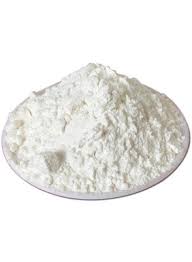 |
| CAS Number | 9063-38-1 |
| Molecular Formula | Cross-linked sodium carboxymethyl starch |
| Molecular Weight | Cross-linked polymer (MW not applicable) |
| InChIKey | Not applicable (cross-linked polymer) |
| SMILES | Available on request where applicable |
| Appearance | White to off-white, free-flowing powder |
| Purity / Grade | By agreed specification and batch COA |
| Storage | Keep tightly closed in a cool, dry, well-ventilated place |
Sodium Starch Glycolate (CAS 9063-38-1, SSG) is a cross-linked, carboxymethyl ether of potato or corn starch sodium salt. It is used as a super-disintegrant in tablet and capsule formulations, swelling rapidly (200–300 times its volume) on contact with water. SSG is one of three primary super-disintegrants alongside croscarmellose sodium and crospovidone.
TCS Industries Limited, a Hong Kong-based trading and sourcing company, supplies Sodium Starch Glycolate in pharmaceutical grade (NF/Ph.Eur.) for global procurement programs.
> Applications
Super-disintegrant for tablets and capsules
SSG at 2–8% is used as a disintegrant in tablet formulations (direct compression and wet granulation). It functions primarily by rapid swelling — absorbing water and expanding to disrupt the tablet matrix. SSG is effective as both intragranular and extragranular disintegrant. It requires slightly higher concentration than croscarmellose sodium due to partial gel formation at high concentrations. Zhao et al. (J Pharm Sci, 2006, 95:2126–2141) compared the disintegration performance and water uptake mechanisms of SSG, croscarmellose sodium, and crospovidone.
Capsule disintegrant
SSG at 4–8% is used in hard capsule fill formulations to promote rapid disintegration of compacted or granulated capsule plugs. Its high swelling capacity makes it effective for dense capsule fills.
> Sourcing & Supply
TCS Industries Limited supports development, qualification and commercial purchasing discussions for Sodium Starch Glycolate with buyers in Germany, France, Italy, Spain, the United Kingdom, the United States, Canada and Australia.
- Evaluation and commercial quantities: 5 kg samples for formulation trials; 25 kg bags for production. Type A (standard) and Type B (low sodium) grades from potato starch available.
- Pallet quantities and production campaigns: repeat supply is coordinated against packaging, lead time, annual demand and destination-market import requirements.
> Quality & Documentation
Key specification parameters include sodium content (2.8–4.2% for Type A / ≤2.0% for Type B), pH (5.5–7.5), loss on drying (≤7.0%), sodium chloride (≤1.0% for Type A), heavy metals (Pb ≤10 ppm), iron, settling volume (≥20 mL/g), and microbial limits. White to off-white free-flowing powder. Starch source (potato or corn) should be specified. Meets NF, Ph.Eur. (Carboxymethylamylum natricum), and JP. COA and MSDS are standard.
> Packaging
SSG is a white to off-white, free-flowing powder. Slightly hygroscopic. Standard packaging includes 25 kg fibre drums or bags with PE liner, palletized. Store at room temperature in dry conditions. Shelf life is typically 36 months. Labels and documents are checked before dispatch.
> Pricing & MOQ
Pricing is quoted by specification, packaging and destination. Common commercial discussions use 25 kg bag/drum formats, pallet quantities and production-campaign planning; smaller samples may be reviewed for qualified formulation teams.
> Regulatory & Compounding Context
Sodium starch glycolate is monographed in NF (Sodium Starch Glycolate), Ph.Eur. (Carboxymethylamylum natricum), and JP. Listed in the FDA IID for oral dosage forms. Not a food additive (pharmaceutical excipient only). No special import permits.
> Alias Index
- Chemical class: Cross-linked carboxymethyl starch sodium salt
- CAS Number: 9063-38-1
- Abbreviation: SSG
- Pharmacopoeial name: Carboxymethylamylum natricum (Ph.Eur.)
- Types: Type A (standard sodium), Type B (low sodium)
- Brand equivalents: Explotab (JRS), Primojel (DFE Pharma), Vivastar P (JRS)
- Commercial request terms: sodium starch glycolate NF, SSG Primojel equivalent, potato starch disintegrant, super-disintegrant pharma, TCS Industries Limited
> FAQ
What is the difference between Type A and Type B SSG?
Type A (standard): sodium content 2.8–4.2%, sodium chloride ≤1.0%. Type B (low sodium): sodium content ≤2.0%. Type B is used when sodium content must be minimized or when NaCl causes API incompatibility. Type A provides slightly faster swelling. Most formulations use Type A unless sodium restriction is required.
What documents are available for Sodium Starch Glycolate orders?
COA and MSDS are standard for commercial discussions. COO, packing list, invoice and other import-support documents can be arranged according to order scope.
Do you supply Sodium Starch Glycolate to Germany, France and Spain?
Yes. We support B2B buyers in Germany, France, Italy, Spain, the United Kingdom, the Netherlands, Poland and Switzerland, subject to route and document review.
Do you supply the United States, Canada and Australia?
Yes. We review the United States, Canada, Australia and New Zealand for project supply, import documents, packaging and logistics planning before quotation.
How does SSG compare to Croscarmellose Sodium?
SSG swells 200–300× its volume; croscarmellose sodium swells 4–8×. SSG requires higher concentration (4–8%) than CCS (2–5%) for equivalent disintegration. At high concentrations (>8%), SSG can form a viscous gel that slows dissolution. CCS has less gel formation tendency. Both are effective super-disintegrants with different optimal concentration ranges.
Is SSG derived from potato or corn starch?
Most pharmaceutical-grade SSG is derived from potato starch. Corn starch-based SSG is available but less common. The starch source affects particle morphology and swelling behavior. Potato-derived SSG generally provides faster swelling. Specify the starch source at inquiry if relevant.
Can you arrange samples before commercial purchasing?
Samples or evaluation quantities may be reviewed for qualified buyers after target specification, application and destination-market requirements are clarified.
How is Sodium Starch Glycolate packaged for export?
Packaging is confirmed by quantity and material properties. Typical options include foil bags, HDPE containers, fibre drums, 25 kg bags or palletized export packaging.
Can buyer-defined specifications be reviewed?
Yes. Send the specification, methods, impurity limits and required documents. TCS can review feasibility before confirming quotation and lead time.
What payment terms are normally used?
Standard payment is 100% T/T before dispatch unless a different arrangement has been approved for an established commercial account.
What lead time should buyers expect?
Lead time depends on stock, batch size, document scope and destination. Available stock can move faster; made-to-order or pallet programs require longer planning.
Can SSG affect tablet hardness?
SSG has minimal binding properties — it does not contribute to tablet hardness. Formulations relying on SSG for disintegration must include adequate binder (MCC, povidone, or starch) to maintain tablet integrity during handling. SSG concentration should be optimized to balance disintegration speed against potential gel formation.
Last reviewed: June 2026
Evaluation and research orders (≤10 kg) are shipped with COA, MSDS, and certificate of origin. Bulk commercial orders (>10 kg) qualify for volume pricing with a full technical documentation package available on request.
> Request a Quote
If your team already has a target application, estimated quantity, destination market, or documentation requirements, send those details so the commercial response can be prepared more efficiently.